
The Supreme Court on Tuesday came down heavily on the Karnataka government over actor Kamal Haasan's film "Thug Life" not being released in the state, saying mob and vigilantes cannot be allowed to take to the streets.

Dhankhar said every word spoken by a constitutional functionary is guided by the supreme sublime interest of the nation.

The Supreme Court expressed its disapproval of an analogy used by the Centre in support of the inclusion of non-Muslims in Waqf boards, stating that such logic would disqualify a bench of Hindu judges from hearing matters related to Waqf. The CJI questioned the Centre's stance on the provisions of the Waqf (Amendment) Act, 2025, which allows non-Muslim members in the Central Waqf Council and state waqf boards. The Solicitor General defended the provisions, emphasizing that the non-Muslim inclusion is limited and does not impact the Muslim composition of these bodies. However, the CJI asserted that judges shed their religious affiliations while serving on the bench and maintained their secularity in their judicial capacity.
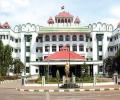
The Madras high court on Tuesday appointed an inquiry officer into the Sivaganga custodial death case and allowed a CB-CID probe into the matter.

The Karnataka High Court has directed suspended JD(S) leader Prajwal Revanna to approach the sessions court for bail in the rape case filed against him. The court clarified that Revanna could return to the HC if necessary, after the lower court considers his plea.
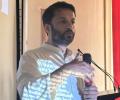
The bench, which examined the online post by the professor, who heads the political science department in the Sonipat-based Ashoka University, questioned his choice of words, saying they were used deliberately to humiliate, insult, or put others in discomfort. "The choice of words are deliberately made to insult, humiliate or cause discomfort to others. The professor, who is a learned person cannot lack a dictionary... he could have conveyed the very same feelings in a simple language without hurting others. He should have shown respect for the sentiments of others. He could have used a simple and neutral kind of language, respecting others," Justice Kant said.

A three-judge Supreme Court bench will hear petitions challenging the constitutional validity of the Waqf (Amendment) Act, 2025, on April 16. The petitions, including those by politicians and the All India Muslim Personal Law Board (AIMPLB) and Jamiat Ulama-i-Hind, were filed in the top court challenging the validity of the newly-enacted law. The Centre has filed a caveat in the apex court, seeking a hearing before any order is passed.
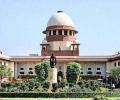
The Supreme Court of India has scheduled a hearing on February 19 for pleas challenging the appointment of the Chief Election Commissioner and Election Commissioners under the 2023 law. The court emphasized the potential consequences if any action is taken before the hearing. The pleas argue that the 2023 law, which excludes the Chief Justice of India from the selection panel, undermines the independence of the Election Commission and allows for undue influence from the executive branch. The court's earlier verdict in March 2023 called for an independent selection panel comprising the Prime Minister, Leader of the Opposition, and the Chief Justice of India to ensure the integrity of the Election Commission. The case highlights concerns about the independence of India's electoral process and the potential for political influence in the appointment of key election officials.
It will be court's opinion versus the legislative power to enact law, the Supreme Court on Wednesday said as it posted the pleas challenging the appointment of the chief election commissioner and election commissioners under the 2023 law on February 4.

The Supreme Court of India has extended the interim bail of Ashoka University professor Ali Khan Mahmudabad, who was arrested for contentious social media posts on Operation Sindoor. The court, however, restrained him from posting anything online with respect to the cases against him, stating that there was no impediment on his right to speech and expression. The court directed the Special Investigation Team (SIT) to furnish the investigation report on the next date of hearing.

The Delhi High Court has set aside a Central Information Commission (CIC) order that directed the disclosure of information related to Prime Minister Narendra Modi's bachelor's degree.
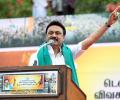
Tamil Nadu Chief Minister M K Stalin has welcomed the Supreme Court's ruling that state governors must give assent to bills passed by state assemblies, calling it a 'historic' victory for all state governments in India. The court's decision came after the Governor of Tamil Nadu, R N Ravi, withheld assent to several bills passed by the state legislature. The court found that the governor's actions were in violation of the Indian Constitution, which mandates that governors must act on the advice of the council of ministers. The ruling is seen as a significant step towards strengthening the federal structure of India.

The apex court had decided to hear the pleas related to the IOA and the AIFF together.

A division bench of the Madras high court on Tuesday expunged the adverse remarks made by a single judge against top Tamil actor Vijay on the issue of entry tax over the import of a luxury car from England in 2012.
The bench will be headed by Chief Justice Ranjan Gogoi and also comprise of Justices S A Bobde, N V Ramana, U U Lalit and D Y Chandrachud.

The Supreme Court of India has refused to relax the ban on firecrackers in the Delhi-NCR region, citing continued alarming levels of air pollution. The court emphasized the right to a pollution-free atmosphere as a fundamental right, stating that the ban is necessary to protect public health. The court also highlighted the issue of noise pollution caused by firecrackers. The decision comes after a batch of petitions were filed by firecracker manufacturers seeking relaxation of the ban.

Chief Minister Omar Abdullah strongly criticized linking Jammu and Kashmir's political future to acts of terror, asserting that Pakistan cannot influence decisions on the region's statehood through terrorism. He announced a signature campaign to press for the restoration of statehood.

The situation in these violence-hit places remained tense on Saturday morning, but no untoward incident was reported, officials said.

The Supreme Court judgment on the legality of same-sex marriage elicited mixed responses from LGBTQ activists, with one section hailing parts of the Constitution Bench's order, while others expressing dissatisfaction as it did not legalise same-gender weddings.

Opposition parties have agreed to the agenda of taking up a special discussion on the Pahalgam terror attack and Operation Sindoor on Monday in Lok Sabha and the next day in Rajya Sabha, brightening up the prospect of normalcy returning to Parliament after the virtual washout of first-week proceedings.
The Delhi high court recently observed the 'next Covid pandemic' was far from over as it asked for details on the Centre's preparedness for the collection of samples, centres and transport policy.

The Supreme Court of India has dismissed a public interest litigation (PIL) seeking to make dowry harassment and maintenance provisions "gender neutral." The court stated that it cannot legislate law and it is the responsibility of Parliament to look into such matters. The PIL, filed by an NGO, argued that these provisions are often misused to harass husbands and their families. The court, however, emphasized that every case must be judged on its own merits, and that the provisions are intended to protect women and children. The court also noted that the allegation of misuse was vague and that such claims should be examined on a case-by-case basis.

The Supreme Court of India has directed its registry to call for a report from IIT Kharagpur and Kota, Rajasthan, after the suicides of a student and a NEET aspirant came to light. The court is seeking to ascertain whether FIRs were registered in both cases, highlighting the disturbing pattern of student suicides in educational institutions. The court has also previously ordered the formation of a national task force to address mental health concerns and prevent suicides in higher educational institutions.

The Supreme Court of India has agreed to hear on May 6 the pleas of the Kerala government against the governor over the delay in approving bills passed by the state assembly. The court will consider whether the issues raised in the Kerala petition are covered by a recent judgment on a similar plea by Tamil Nadu, which set timelines for governors and the President on granting assent to bills.

The Supreme Court of India has made public the asset details of its judges, including Chief Justice Sanjiv Khanna who has Rs 55.75 lakh in a fixed deposit, a three-bedroom DDA flat in south Delhi, and a four-bedroom apartment measuring 2,446 square feet in the Commonwealth Games Village. The court has also uploaded the complete process of appointments to the high courts and the Supreme Court on its website for public awareness.
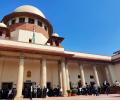
Justice Gavai, who wrote a 281-page separate but concurring verdict, said it is the duty of the State to give preferential treatment to the backward class of citizens who are not adequately represented in government jobs.
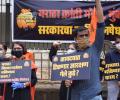
Economically Weaker Sections (EWS) have been given 10 per cent quota in admissions and jobs out of 50 per cent general category seats for the first time without eroding the "totally independent" reservation for SCs, STs and OBCs, the Centre told the Supreme Court on Tuesday.

A bench of Justices Sanjiv Khanna and Sanjay Kumar termed the plea as "absolutely misconceived" and said how can it sit in appeal over an order passed by another bench of the apex court.
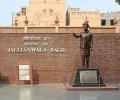
Former Supreme Court judge Justice Rohinton Nariman has warned that events similar to the Jallianwala Bagh massacre could occur if the 'basic structure' doctrine of the Constitution is diluted. In his new book, 'The Basic Structure Doctrine: Protector of Constitutional Integrity,' Nariman argues that the 1973 Kesavananda Bharati judgment, which established the doctrine, is essential for protecting fundamental rights and preventing constitutional amendments that could lead to such tragedies. Nariman's concerns are echoed by Supreme Court judge Justice K V Viswanathan, who applauds the book for its "chilling clarity" and underscores the importance of the Kesavananda Bharati ruling. The book provides a detailed analysis of the doctrine and its implications, highlighting the robustness of the Kesavananda Bharati judgment and the lack of a compelling alternative theory.
A bench of Justices Sanjiv Khanna and Dipankar Datta posed the question to former Rajya Sabha MP Subramanian Swamy and lawyer Vishnu Shankar Jain, who sought deletion of the words "Socialist" and "Secular" from the Preamble of the Constitution.

Solicitor General Tushar Mehta, the Centre's key counsel in defending the abrogation of Article 370 of the Constitution, said on Monday the Supreme Court verdict upholding the government's August 5, 2019, decision will go down in history as the one that corrected a "Himalayan constitutional blunder" of gigantic proportions.

Emphasising that human rights are the most sacrosanct component of a human life, the Jammu and Kashmir High Court has ordered the Union Home Ministry to facilitate the return of a woman deported to Pakistan following the Pahalgam terror attack.

The committee said the Uttar Pradesh government did not file appeals against the high court's November 8, 2023 order and instead, an impleadment application was filed in the pending plea before the top court.

The top court issued notices to Union ministries of law and justice and minority affairs as well as the National Commission of Women after taking note of the plea of Delhi-based woman Nafisa Khan challenging the practice of polygamy and 'nikah halala', and said that the matter will be taken up a five-judge Constitution bench.

Issuing notice to the ED on the plea filed by the Tamil Nadu government and Tamil Nadu State Marketing Corporation (TASMAC), a bench comprising Chief Justice B R Gavai and Justice Augustine George Masih told Additional Solicitor General S V Raju, appearing for the anti-money laundering probe agency, that "Your ED is crossing all the limits."

Several opposition parties have claimed that the mandate of 2024 Lok Sabha elections was against the ruling haratiya Janata Party, even though it was able to form the government with support of other parties.

Justice Nazeer, along with then Chief Justice of India J S Khehar, was in minority in the 'triple talaq' judgement which was delivered in August 2017.
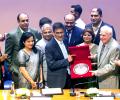
While that created a stir so did the decision on his penultimate day at work with the Supreme Court rechristening its summer vacation "partial court working days", an issue that has led to criticism that the apex court judges enjoyed long breaks.
The Supreme Court on Monday agreed to consider listing for urgent hearing the petitions challenging the constitutional validity of the Waqf (Amendment) Act, 2025.
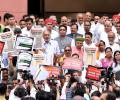
While India today is vastly different from the India of 1975, the need for vigilance against authoritarianism remains the same, asserts Utkarsh Mishra.
